
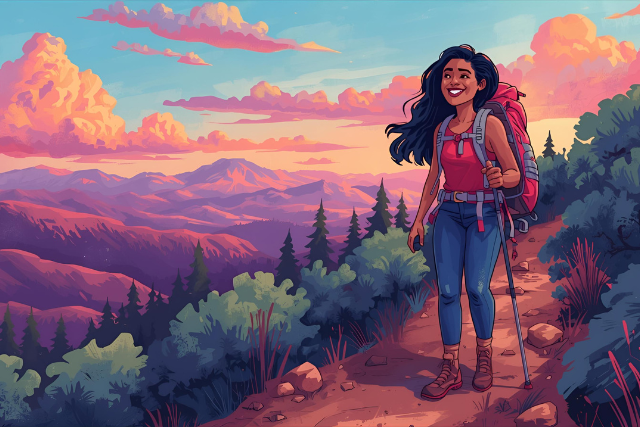
Not a Witch, Not a Spinster, Not a Divorcee
“The greatest thing in the world is to know how to belong to oneself.” ~Michel de Montaigne
Many individuals dread arachnids. Others tremble at the thought of addressing a crowd.
My deepest apprehension? That my constant companion will forever remain my own image staring back.
Increasing numbers of people are embracing singlehood—not out of exuberant choice, but through a subtle acceptance of this path. The notion of remaining alone indefinitely ranks among the most dreaded scenarios for countless individuals. Surprisingly, this topic receives little open discussion.
I hold no grudge against men—I genuinely appreciate them. Nor do I intend to criticize partnerships—I aspire to one filled with awareness and commitment someday. Instead, my purpose is to amplify the overlooked narrative: the authentic experience of being single. This perspective has long been marginalized, stigmatized, and overshadowed.
People across genders harbor anxieties about solitude. As a woman, I navigate this fear daily, yet it stems from ingrained cultural, instinctual, and societal conditioning that affects everyone.
The stigma surrounding single life clings persistently and subtly. It persuades individuals to cling to outdated relationships, deeming them preferable to independence. It insinuates that personal completeness requires a partner. Compounding this issue is the scarcity of examples showcasing joyful, single existences.
I am neither a sorceress, nor an old maid, nor a separated spouse.
Consider this anecdote: during a work visa application overseas, the form limited marital status options to married, divorced, or spinster. Reluctantly, I selected the latter. The memory amuses me now, but it underscores a profound societal bias—unpartnered status demands labeling as defective.
It’s in Our Bones
These attitudes trace back through millennia. Historically, women’s security hinged on male provision—economically, socially, and legally. This reliance embedded messaging across generations, influencing all genders today. We’ve internalized that fulfillment derives from external union.
For those enduring extended periods alone, a unique sorrow lingers—not from loss, but from unexperienced ideals. We lament the promised closeness, the fabled soulmate we were conditioned to seek. This grief haunts more from inherited narratives than personal reality.
Perhaps fairy tales distorted our views. Or iconic lines like “you complete me” from films. Yet relational fixation predates media; it’s ancient, propelling quests for others before self-discovery.
Contemporary dating markets exploit this heritage, monetizing our relational voids into vast enterprises.
It emerges in subtle instants, such as a friend post-long-term breakup murmuring, “What if no one else comes along?” as though solitude equates catastrophe.
Legacy, Good Girl, and the Seventh-Grade Soothsayer
Though practical dependencies have faded, internal voices persist unchanged.
In my experience, they manifest as:
- The lineage-pressured aspect convinced value solidifies only through selection.
- The compliant daughter avoiding familial letdown, nodding graciously to assurances of imminent partnership.
- The approval-seeker contemplating self-diminishment for broader appeal.
- The wounded youth haunted by a middle-school taunt—“You’ll never get a boyfriend”—fearing its prescience.
Diverse personas, unified echo: inherent insufficiency without coupling.
Swiping Right on Your Insecurities
Dating apps, coaches, services, and literature capitalize on this programming, framing singledom as solvable deficiency.
Recently, on a full-day drive, I absorbed a self-improvement audiobook promoting self-becoming—yet ultimately aimed at attracting mates. Where reside guides for self-deepening as life’s core, unbound by romantic pursuits?
Must every app-facilitated encounter qualify as romance? Organic connections once sparked in daily locales; now algorithms mediate amid eye-contact aversion.
Ironically, coupled acquaintances exhibit greater enthusiasm for my initial interactions than I, viewing them as salvation from singleton plight.
Love, Yes; Panic, No
Instincts compel bonding; we yearn for closeness and community. Denial serves no purpose.
At issue is terror of perpetual singlehood—fueling unwise choices, toxic bonds, and industrial exploitation of doubts.
Instead of fixating externally, embrace universal loving: self-compassion, generosity, world-mending benevolence. Fleeing self-perceived flaws blinds us to boundless loving potential.
The Gift of Being Unpartnered
Unspoken truth: total autonomy reigns.
Stray socks? Mine alone. Vanished yogurt? My doing. Impromptu travels, sprawled slumber, unchallenged temperatures. Streaming queues reflect solely my tastes; undisturbed repose, save canine interruptions.
Truthfully, my starkest dread isn’t isolation, but mundane peril like choking unattended, or forgoing profound vulnerability I still desire.
Yet liberation abounds: profound self-acquaintance impossible in perpetual pairing. An uncompromised identity emerges. Singledom merits no pity—it’s potent validity. No failure; worth transcends timelines.
Soul connections thrive in platonic realms too. My confidante and I envision adjacent elder years. Bonds transcend romance, freeing profoundly.
Single By Trust, Not Default
Embracing unpartnered life as self-faith defiance amid pairing mania proves revolutionary. In 2025, fluidity in identity flourishes—why rigid relational judgments persist?
This transcends bravado independence defined oppositionally. True essence: unapologetic self-living, status incidental.
Reframe: not “End alone?” but “Who absent selection?”
Find me preparing for Portugal’s Camino—solitary pilgrimage of steps, spirit, no accompaniments needed.