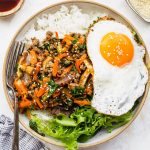

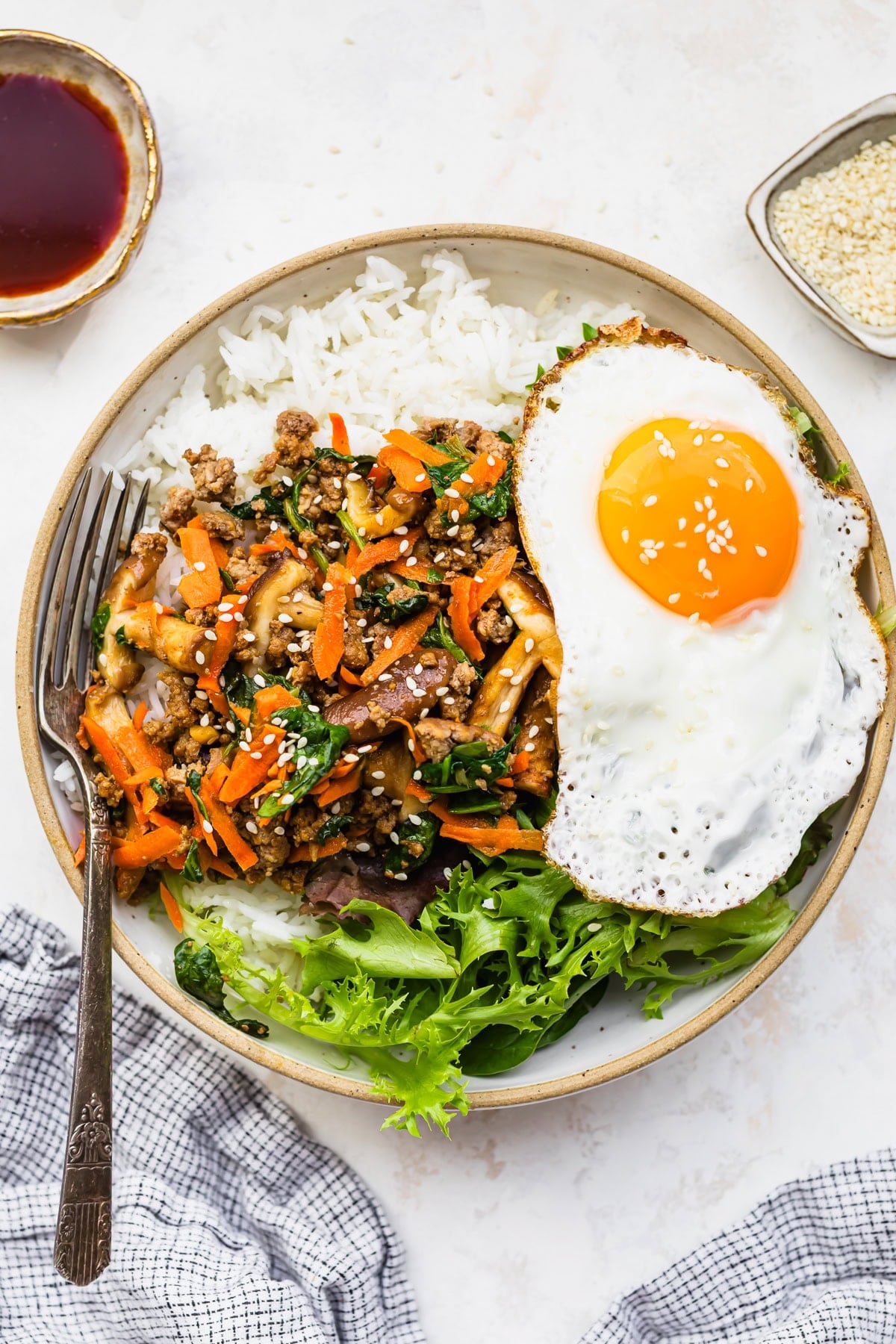
Ground Beef Bibimbap represents a speedy, Korean-style dish prepared in a single skillet, featuring flavorful beef paired with an assortment of vegetables. This delightful meal is served atop steamed rice, crowned with a perfectly fried egg, and comes together in less than half an hour for ultimate convenience on busy evenings.

Simplified Korean Bibimbap with Ground Beef
This straightforward, Korean-influenced ground beef bibimbap offers a streamlined, single-pan adaptation of the beloved traditional recipe. If you have previously prepared a dish like ground beef and broccoli stir-fry, you will appreciate just how versatile and delicious ground beef proves to be in rapid stir-fry preparations. This particular rendition matches that speed while incorporating an abundance of vegetables and the distinctive, authentic flavors characteristic of bibimbap. Simply ladle the mixture over steaming rice, add a fried egg on top, and savor a comforting, irresistible bowl that surpasses takeout in both speed and cost-effectiveness, all crafted from everyday grocery store staples.
Reasons to Adore This Quick Bibimbap Dish
Having once worked mere blocks away from the vibrant Koreatown in New York City, I developed a cherished habit of enjoying swift Korean lunches during my breaks. My inaugural encounter with a bibimbap bowl left me utterly captivated by its medley of sizzling vegetables, tender savory beef, and that luscious runny egg yolk mingling seamlessly with the warm rice. Given the popularity of my Korean beef bowls among home cooks over the years, I set out to develop a version perfectly suited for effortless weeknight preparation right in your own kitchen.
- Economical protein option: Opting for ground beef delivers superior value per pound compared to pricier cuts like sirloin or flank steak, making it an ideal choice for frequent family meals.
- Single-pan preparation: The beef and vegetables come together swiftly in one skillet, resulting in a hearty filling with virtually no cleanup required afterward.
- Vibrant Korean flavors: A simple yet potent sauce infuses the dish with a perfect balance of savory, sweet, and umami notes inspired by authentic Korean cuisine.
- Quicker and cheaper than delivery: This recipe outpaces restaurant options in preparation time and expense, relying on accessible supermarket ingredients.
- Versatile for all ages: Easily adjustable for spice levels and adaptable with different vegetables to suit family preferences and pantry availability.
Essential Ingredients for Beef Bibimbap
Here is a comprehensive breakdown of every component needed to create this beef bibimbap masterpiece. For precise quantities, refer to the detailed recipe instructions provided further below.

- Gochujang: This iconic Korean paste delivers a unique blend of mild heat, sweetness, and depth, traditionally featured as the signature sauce in bibimbap presentations.
- Toasted sesame oil: Adds a rich, nutty undertone that elevates the overall flavor profile of the dish.
- Low-sodium soy sauce: Allows precise control over the saltiness, ensuring a balanced taste without excess.
- Rice vinegar: Introduces a bright acidity that harmonizes beautifully with the richer elements.
- Lean ground beef or bison: Select 90/10 lean-to-fat ratio for optimal texture and reduced calorie content.
- Avocado oil: Its elevated smoke point makes it exceptionally suitable for high-heat egg frying without burning.
- Fresh vegetables: Incorporate sliced shiitake mushrooms, shredded carrots, and chopped baby spinach to enhance fiber intake, vitamins, and essential minerals.
- Aromatic enhancers: Finely minced garlic and freshly grated ginger provide foundational savory and zesty notes. Pro tip: Freeze excess ginger in a resealable bag and grate it directly, skin included, for future use.
- Large eggs: Their creamy yolks integrate flawlessly with the rice for an authentic bibimbap experience.
- Serving accompaniments: Pairing with rice and fresh greens optimizes nutrition by lowering calories and carbs while increasing vegetable content. Finish with a sprinkle of sesame seeds for texture and visual appeal.
Step-by-Step Guide to Preparing Ground Beef Bibimbap
True to its name, this ground beef bibimbap recipe emphasizes efficiency and simplicity, ready from start to finish in mere minutes. Detailed printable steps are available at the conclusion of this guide.


- Prepare the signature sauce: In a small bowl, thoroughly whisk the gochujang, sesame oil, soy sauce, and rice vinegar until fully emulsified and uniform. Reserve for later use.
- Brown the beef: Heat a spacious skillet over medium-high flame. Add the ground beef, crumbling it into bite-sized pieces as it cooks. Stir periodically until nearly fully browned, approximately five minutes, then carefully drain any accumulated liquid to prevent sogginess.
- Incorporate vegetables: Introduce the sliced shiitake mushrooms, chopped garlic, and grated ginger directly into the skillet with the beef. Sauté until the mushrooms soften and release their moisture, about five minutes. Follow with grated carrots and chopped spinach, stirring until the greens wilt completely, around three minutes more. Pour in the prepared gochujang sauce, mix evenly to coat everything, and promptly remove from heat to preserve vibrancy.
- Fry the eggs sunny-side up: In a separate nonstick skillet, warm the avocado oil over medium-low heat. Once heated, gently crack the eggs into the pan and cover, cooking for four to six minutes until whites solidify while yolks remain delightfully runny.
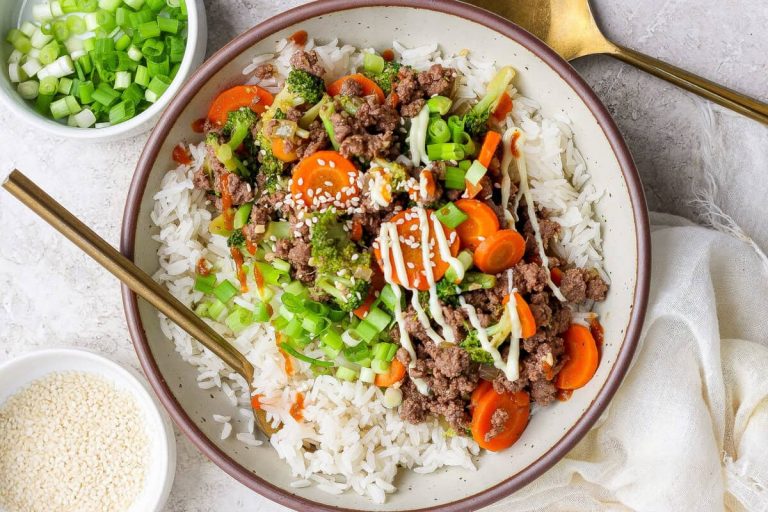
- Assemble the bowls: Evenly distribute cooked rice and mixed greens into four serving bowls as the base layer. Generously spoon the beef-vegetable mixture over the top, place one fried egg per bowl, and scatter sesame seeds for garnish. Offer additional gochujang on the side for customizing heat levels.

Customizable Variations for Bibimbap
This recipe lends itself beautifully to personalization based on dietary needs, available ingredients, or taste preferences. Here are some inspired adaptations to explore.
- Gluten-free adaptation: Substitute soy sauce with tamari or coconut aminos, ensuring your gochujang label confirms gluten-free status.
- Alternative proteins: Swap ground beef for lean ground turkey or chicken to further economize without sacrificing flavor.
- Vegetarian delight: Skip the beef entirely and incorporate extra-firm tofu, diced bell peppers, edamame, or sliced cucumbers for a plant-powered version.
- Mushroom flexibility: Shiitakes unavailable? Baby bella mushrooms work splendidly. Not a mushroom fan? Sub with additional veggies from the list above.
- Greens variety: Exchange baby spinach for hearty kale or nutrient-dense Swiss chard.
- Rice preparation ideas: Master brown rice in the Instant Pot or on the stovetop, or opt for quick-cooking jasmine rice in the pressure cooker. For maximum speed, pre-packaged microwaveable frozen rice is a lifesaver.
- Low-carb modification: Replace rice with cauliflower rice or serve solely over a bed of mixed greens for a lighter, veggie-forward meal.

Complete Recipe Details
Prep Time: 10 minutes | Cook Time: 20 minutes | Total Time: 30 minutes | Yield: 4 servings | Serving Size: 1 bowl
- 2 tablespoons gochujang, plus extra for serving
- 1 teaspoon toasted sesame oil
- 3 tablespoons low-sodium soy sauce
- 1 tablespoon rice vinegar
- 1 pound lean ground beef, bison, turkey, or similar
- 1 teaspoon avocado oil
- 8 ounces shiitake mushrooms, thinly sliced
- 3 cloves garlic, finely chopped
- 1 teaspoon freshly grated ginger
- 1 cup grated carrot (pre-shredded acceptable)
- 5 ounces baby spinach, roughly chopped
- 4 large eggs
- Sesame seeds, for garnish
- 3 cups cooked white or brown rice, for serving
- Mixed greens, for serving
- Combine gochujang, sesame oil, soy sauce, and vinegar in a small bowl, whisking vigorously until smooth. Set this flavorful mixture aside.
- In a large skillet heated to medium-high, add ground beef and crumble thoroughly. Cook with occasional stirring until mostly browned, about five minutes. Drain excess fat meticulously.
- Introduce mushrooms, garlic, and ginger, stirring to integrate. Sauté until mushrooms exude their juices, roughly five minutes. Add carrots and spinach, cooking until greens wilt, about three minutes. Incorporate the sauce, stir well, and remove from heat.
- Meanwhile, heat avocado oil in a nonstick skillet over medium-low. Crack eggs in, cover, and cook 4-6 minutes until whites set. Remove promptly.
- Assemble: Layer rice and greens in bowls, top with beef mixture and egg, garnish with sesame seeds, and serve alongside extra gochujang.
Yield Notes: Sauce yields slightly over ¼ cup; meat mixture produces 4 heaping cups. Ideal for meal prepping—consider soft-boiled eggs for advance preparation.
Nutrition per Serving (1 bowl): 327 kcal, 12g carbohydrates, 35g protein, 15.5g fat (5g saturated), 257.5mg cholesterol, 952mg sodium, 3g fiber, 5.5g sugar.
Storage and Reheating Guidelines
- Refrigeration: Store meat and vegetable blend in airtight containers up to 4 days. Keep rice and greens separate. Fry eggs fresh for each serving.
- Freezing: Meat and veggies freeze well for 3 months. Portion rice with beef and sauce in individual containers for grab-and-go meals.
- Reheating process: Thaw overnight in refrigerator, then microwave to heat through. Add fresh greens and a newly fried egg upon serving.

Frequently Asked Questions
What exactly defines beef bibimbap? Bibimbap translates to “mixed rice” and is a staple Korean bowl brimming with seasoned beef, assorted vegetables, and a signature runny fried egg. While traditional versions often use sliced steak, ground beef offers affordability and zero knife work.
How does bibimbap differ from beef bulgogi? Bulgogi features thinly sliced, marinated premium beef like sirloin or ribeye, grilled to perfection. Bibimbap, conversely, is a customizable rice bowl that might incorporate bulgogi but accommodates various proteins.
Is bibimbap suitable for meal prepping? Absolutely—pack rice and beef together, greens separately. Reheat the protein and grains in the microwave, then toss in fresh greens for crunch.
Can eggs be prepared in advance? Freshly fried eggs shine brightest, so prepare them on the spot if possible. For portability, experiment with cooling and storing fried eggs, though reheating may alter texture slightly.